Is Michael Saylor's Bitcoin Treasury Company Strategy Broken?
Michael Saylor transformed Strategy (MSTR) into a pioneering Bitcoin treasury company, creating a novel business model that captivated investors during the crypto bull market. As Bitcoin's (BTC) price soared, MSTR's stock followed suit, appearing like a stroke of genius. The strategy seemed foolproof: hold BTC indefinitely as a corporate reserve.
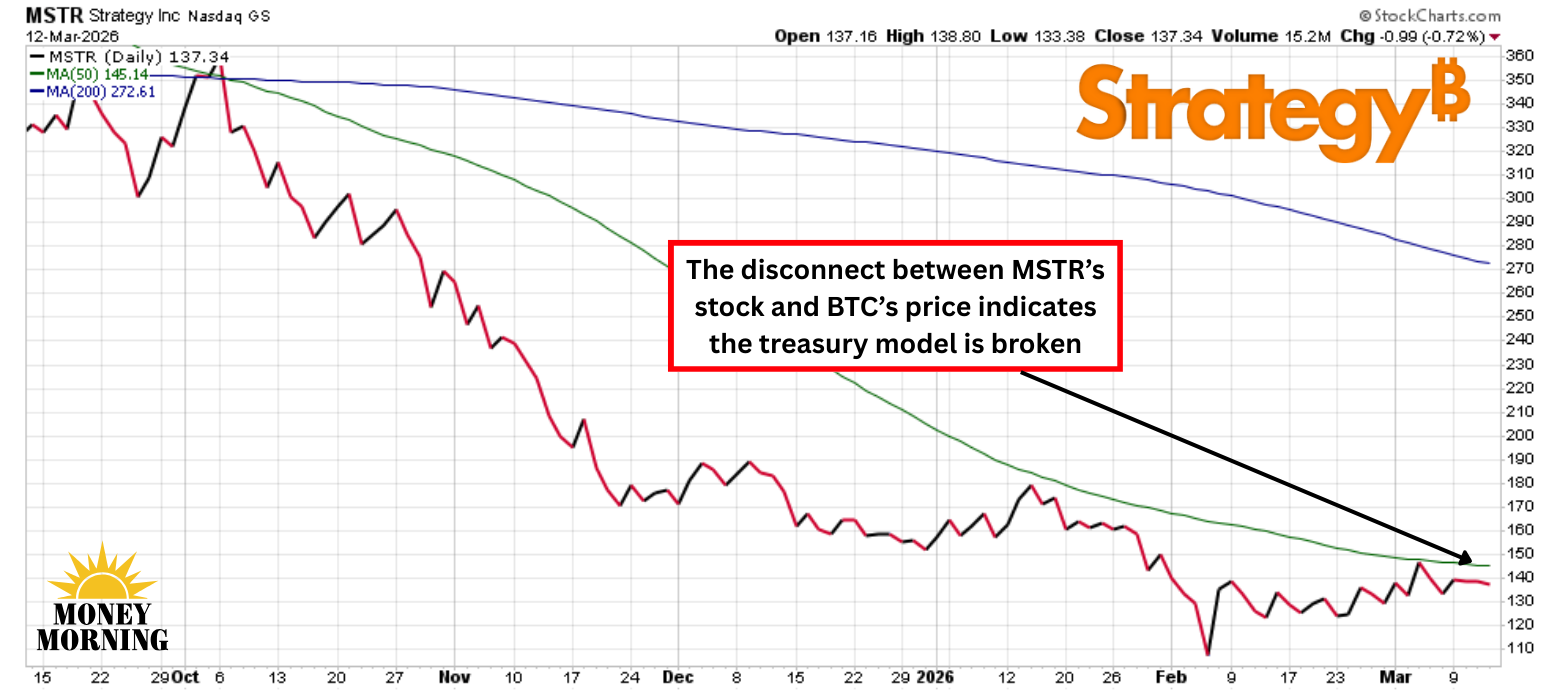
However, the crypto collapse last October shattered this illusion. Bitcoin's price plummeted, dragging MSTR down sharply and sparking fears that Saylor might need to sell some holdings – contrary to his ironclad vow never to do so. Now, with BTC climbing back above $72,000, MSTR's stock remains stagnant and has plunged 70% from its peak. Is Saylor's Bitcoin treasury strategy broken?
The Proliferation of Copycat Treasuries
MSTR's playbook quickly inspired a wave of imitators. Dozens of public companies began converting cash reserves into Bitcoin holdings, hoping to replicate the leveraged upside. Others pivoted to alternative assets, such as Bitmine Immersion Technologies (BMNR), which has amassed millions of Ethereum (ETH) tokens to position itself as the leading Ethereum treasury firm. These copycats range from small-cap firms to established names, all promising amplified crypto exposure through stock ownership rather than direct wallet management.
Yet the results have been disappointing. While Bitcoin and Ethereum have staged recoveries, the stocks of these crypto treasury companies remain deeply depressed. Many trade at discounts to the net asset value of their holdings, suggesting a fatal flaw in the model that extends beyond temporary market dips.
Unraveling the Flaws in the Model
Several structural issues explain why MSTR – and its peers – fail to track crypto gains anymore. Continuous share issuance and convertible debt raises fund new purchases but massively dilute existing shareholders. What once traded at a 2x to 3x premium to Bitcoin holdings now sits at a discount, as investors question sustainability. The legacy software business generates negligible cash flow, while dividend and interest obligations create ongoing pressure. Without fresh capital, the strategy risks liquidity strains that could force sales Saylor had sworn to avoid.
In bull markets, leverage and hype delivered outsized returns. In recovery phases, dilution erodes per-share value, regulatory scrutiny grows, and easier alternatives like spot ETFs reduce the appeal of a corporate middleman. The amplification that fueled gains now magnifies downside risks without restoring the premium.
Bottom Line
The crypto treasury approach made perfect sense in theory – a leveraged, accessible play on Bitcoin's or Ethereum's long-term appreciation without direct ownership hassles. Yet when stress-tested by market downturns, it reveals critical weaknesses: shareholder dilution, balance sheet risks, and eroding investor confidence.
For those seeking exposure to BTC or ETH, bypassing the middleman like MSTR or BMNR and buying the assets directly – or via spot ETFs – offers a cleaner, less complicated path with full upside potential and no corporate overhead.