Meta's Agentic AI Ambitions Take a Hit: China Blocks $2 Billion Manus Deal
Meta Platforms (META) didn''t just spend big on AI last year — it went all in.
With more than 4 billion monthly users across its apps, Meta Platforms has the scale. What it needs now is payoff. CEO Mark Zuckerberg has made that clear, calling 2026 a breakout year for what he calls "personal superintelligence" — AI that doesn''t just answer questions, but actually gets things done.
For a moment, it looked like Meta had found its shortcut.
Then geopolitics stepped in.
Meta''s Big AI Vision Just Hit Reality
Meta Platforms isn''t chasing chatbots — it''s chasing autonomy.
The company''s vision centers on AI agents that can plan, execute, and deliver results with minimal input. Think less "ask a question," more "delegate a task." These systems can write code, analyze data, run workflows, and iterate on their own.
That''s the difference between novelty and necessity – and where Meta wants to win.
To get there, Meta has been pouring money into infrastructure, open-sourcing its Llama models, and embedding AI across Facebook, Instagram, and WhatsApp.
But there was still a missing piece: execution.
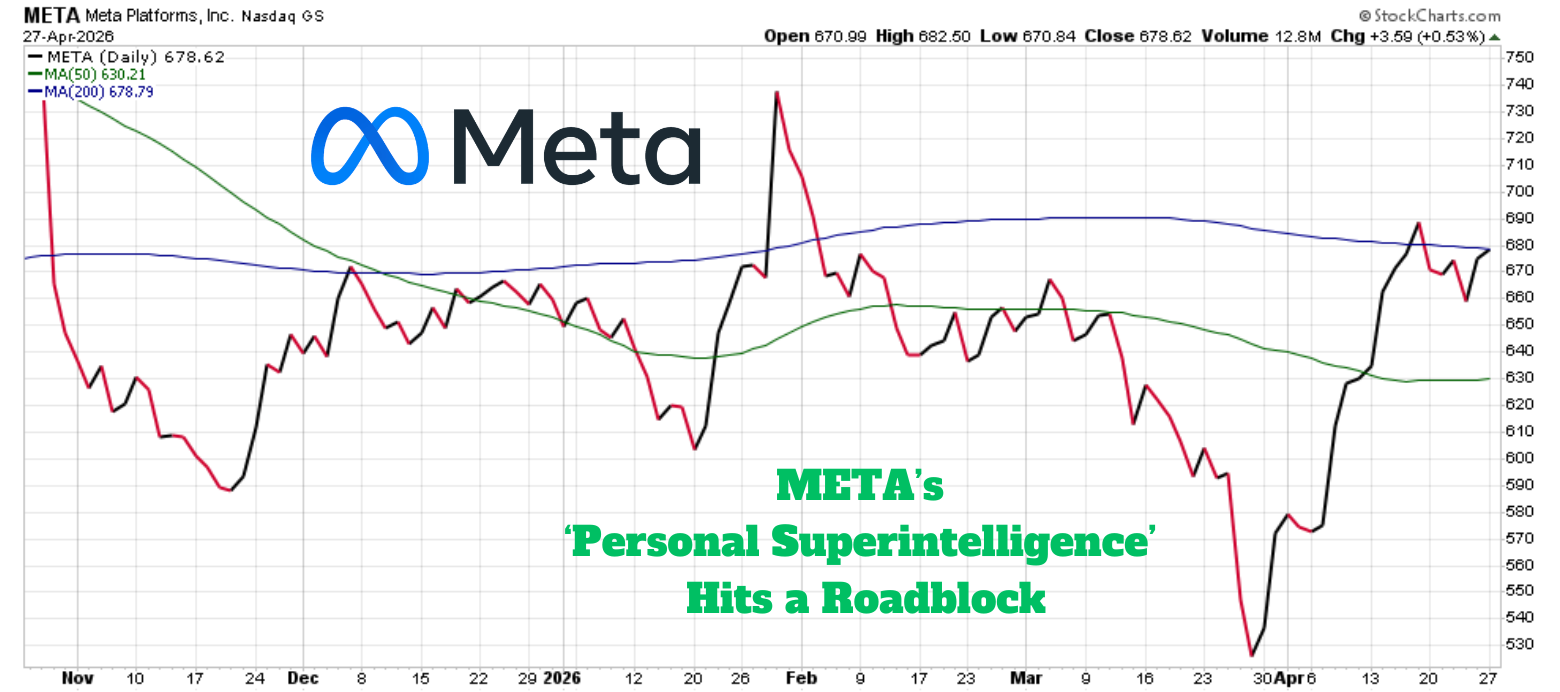
Enter Manus — and Then China
Manus, a fast-rising AI agent startup, looked like the perfect bolt-on. Its technology already had real-world adoption and revenue, exactly the kind of execution layer Meta has been trying to build internally.
The reported $2-3 billion deal would have given Meta an immediate accelerant on agentic AI – the kind of capability Zuckerberg has been telegraphing as central to Meta''s next chapter.
Instead, Beijing intervened, citing concerns about the transfer of sensitive technology abroad. The deal is now effectively dead.
AI isn''t just a business anymore. It''s a strategic asset.
Meta Still Has the Firepower
Losing Manus hurts. There''s no clean way to replace a ready-made solution that was already generating revenue.
But Meta Platforms isn''t starting from zero.
The company still controls:
- Industry-leading open-source models
- Massive global distribution
- Deep engineering talent
- Tens of billions in annual AI spending capacity
In other words, Meta can still build what it needs — it just can''t skip the line anymore.
Expect the company to double down on internal development, explore alternative deals with fewer geopolitical strings, and lean even harder into its open ecosystem to attract developers.
The Bigger Risk Investors Can''t Ignore
This episode highlights something investors are only starting to price in:
AI isn''t just about chips, models, or capital.
It''s about politics.
Cross-border deals — especially in advanced tech — are becoming harder to execute. Even carefully structured acquisitions can unravel overnight if they brush up against national interests.
For companies like Meta Platforms, that adds a new layer of uncertainty to an already expensive race.
Bottom Line
Meta''s path to personal superintelligence just got longer – not blocked.
The company still has the scale, capital, and ambition to compete at the highest level. But the Manus setback shows that building the future of AI isn''t just a technical challenge anymore.
It''s a geopolitical one.
And that may be the toughest bottleneck of all.