Nvidia Isn't Just Building AI Chips Anymore -- It Wants to Own the Entire AI Stack
The AI boom is changing fast.
Two years ago, investors cared about one thing: who had the best chips. That fueled Nvidia's (NVDA) rise into a nearly $4 trillion company. But the next phase of AI is less about hardware, and more about who controls the ecosystem businesses actually use every day.
That's where things get interesting.
Amazon (AMZN) didn't dominate cloud computing because it sold servers. Microsoft (MSFT) didn't become indispensable because of Windows alone. They won because businesses built entire operations on top of their platforms.
Now Nvidia is pulling the same trick.
Its new Nemotron 3 Nano Omni launch may have flown under Wall Street's radar. It shouldn't have.
Nvidia Is Moving Beyond "Picks and Shovels"
For years, Nvidia supplied the engines powering AI.
In fiscal 2026, data center revenue jumped 75% year over year to $193.7 billion. Free cash flow reached $96.6 billion. Gross margins stayed above 71%.
Those are software-company numbers attached to a chipmaker.
But Jensen Huang understands something many investors still miss: hardware alone rarely owns the biggest profit pools forever.
So Nvidia is climbing higher up the stack.
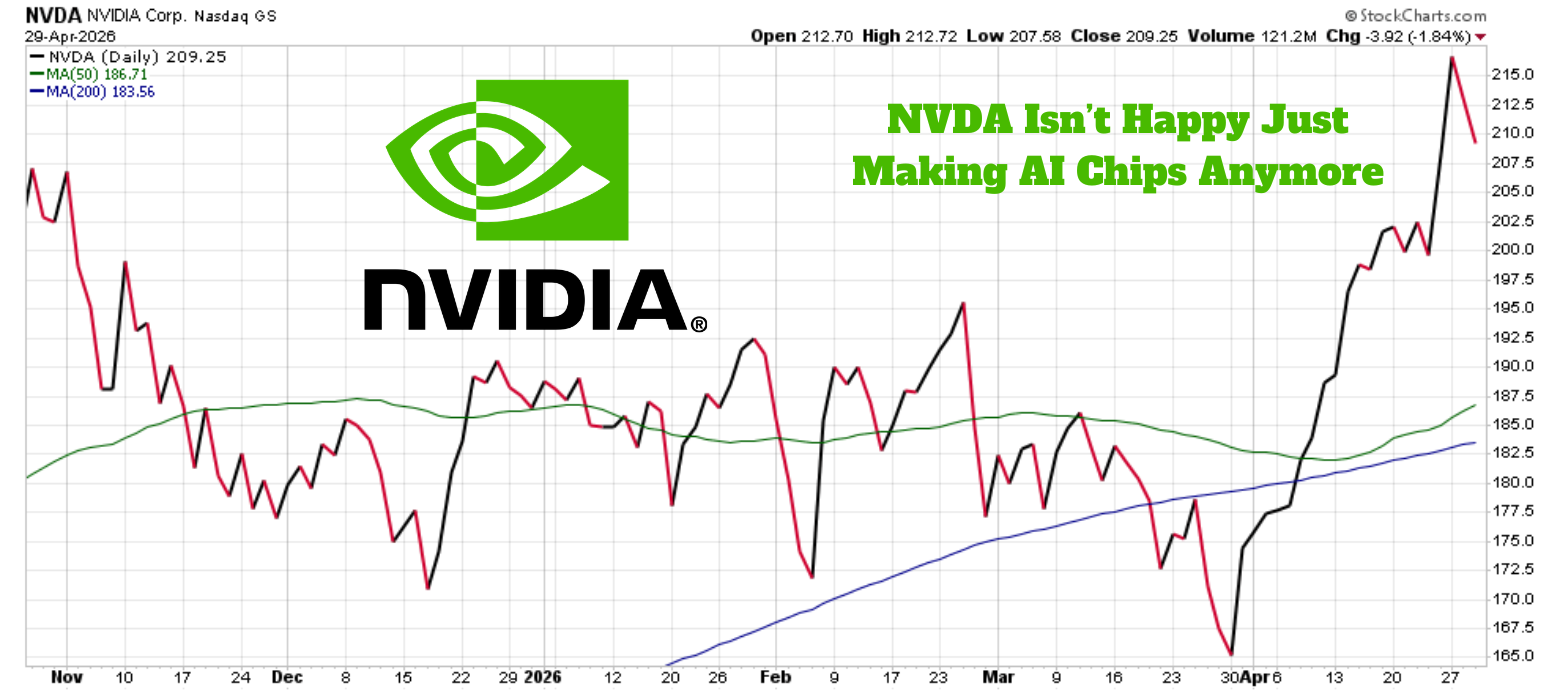
Shares sit near 19 times forward earnings. That's below Microsoft and below most semiconductor peers.
But investors may be valuing Nvidia incorrectly.
If Nvidia is only a semiconductor company, the valuation looks reasonable.
If Nvidia becomes the operating layer for enterprise AI deployment, that changes the equation entirely.
Platform companies command higher multiples because customers stick around longer. Revenue becomes more recurring. Ecosystems deepen.
That's exactly what happened with AWS and Microsoft. And Nvidia is following the same roadmap.
Bottom Line
In short, Nemotron 3 Nano Omni is about far more than another AI model release.
It signals Nvidia wants control over the entire enterprise AI pipeline, from chips and networking to models, deployment tools, and agent infrastructure.
That won't happen overnight. Competition from Alphabet (GOOGL), Microsoft, Amazon, and OpenAI remains fierce. AI spending cycles could cool. Margins could narrow.
But Nvidia is no longer acting like a company content selling hardware alone.
It's acting like a company trying to become the foundational platform businesses build AI on. And if that strategy works, smart investors may eventually realize Nvidia's biggest opportunity was never just GPUs in the first place.